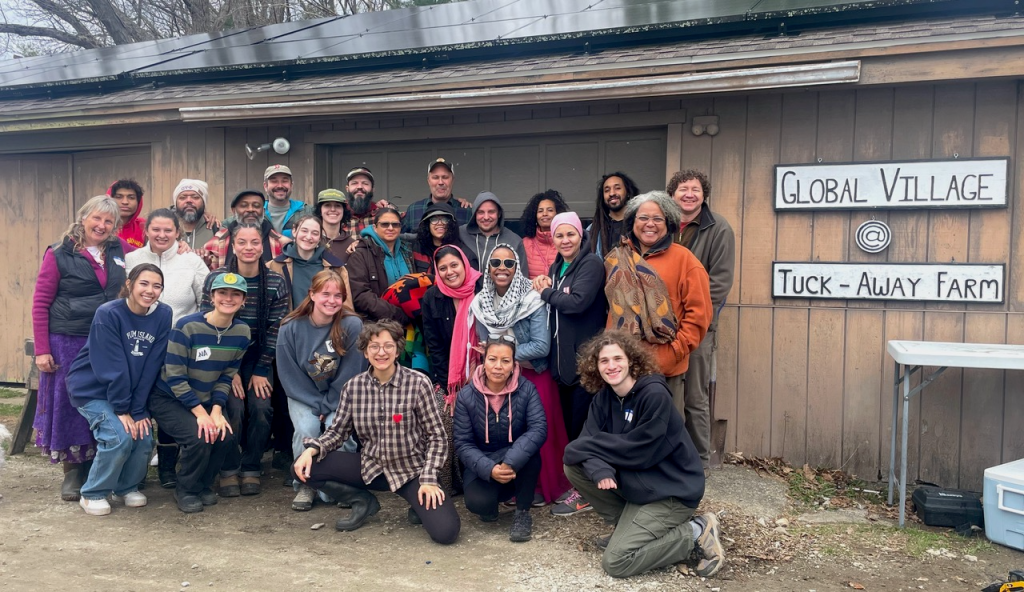
BSE students at a 2024 Land Gathering at Global Village with friends from Land in Common, Cooperation VT, Cooperation Jackson, and Community Movement Builders
BSE is assembled through courses, projects, independent studies and internships. We mobilize collaborative, engaged teaching and research methods and ground ourselves in economic anthropology, political ecology, black feminism, and anti-essentialist political economy. We are in dialogue with a broad range of social theory and place-based knowledges. Through this work we aim to:
Transform ourselves: BSE creates lines of connection for students—-material and relational, ideological and libidinal—-to initiatives, communities, and social movements that are creating the conditions for ways of being in the world that reject and evade the dictates of capitalist modernity, ways of being that privilege the interdependent well-being of people and planet over profit.
Advance well-being: BSE helps to advance, and amplify initiatives, efforts, and communities that are engaged in such world-making projects
Gain knowledge, skills and joy: BSE develops deep understandings about how culture (broadly conceived) enables and limits what is possible in the world. Students develop a stance of critical curiosity, learn research skills, practice and hone writing and other modes of communication, and center collaborative leadership through both academic and non-academic modes and relations. We build and practice super-fun, caring, joyful relationships!
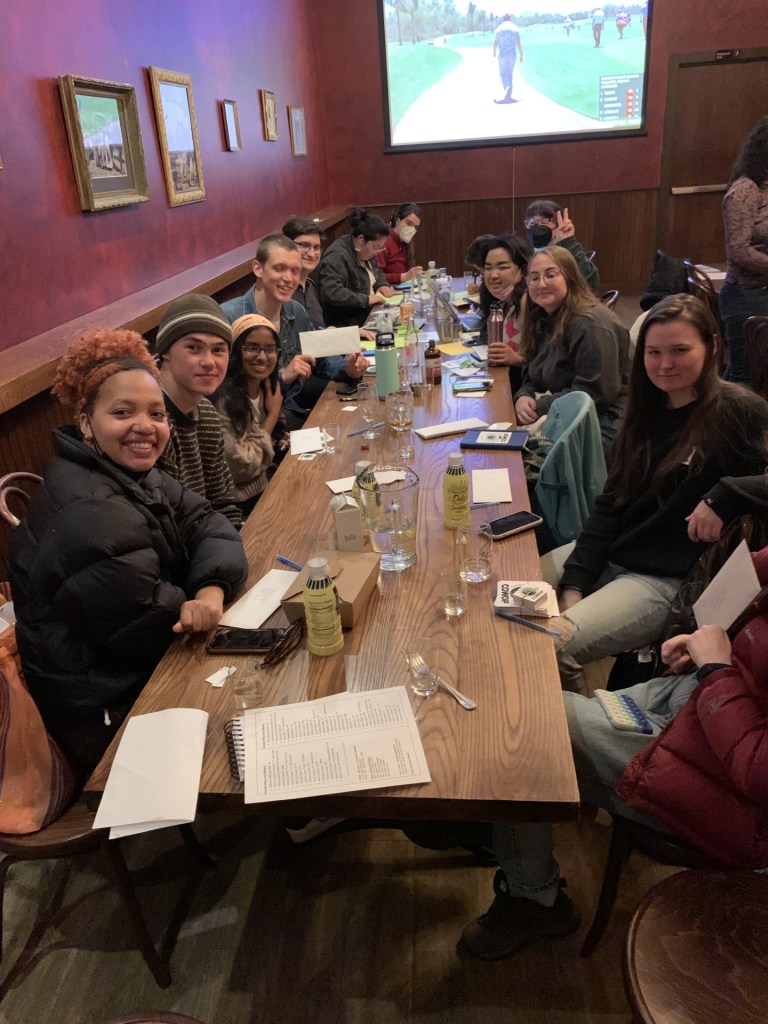

Other economies and other worlds are possible, and already exist! Our task is to help make them more visible, powerful, and durable.
Anthropology 340 Other Economies are Possible (!)
This course explores how “we” (a divergent, heterogeneous “we”) are produced as economic subjects–capitalist and especially otherwise. We theorize economy as diverse and in-the-making. We learn from local organizers and community members who are involved in diverse and community economies. We engage with UMass’s growing diverse economy to locate affects, desires, knowledge, practices and ways of being that work against and outside of the dominant capitalist economy. In groups, we create projects that can help to produce ourselves (and others) as interdependent, caring, post-capitalist subjects.
Anthropology 341 Building Solidarity Economies
This is a 7 credit course (4+ 3 additional practicum credits) that runs every other year. We collaborate with initiatives and movements that are building and fighting for economies that privilege “people and planet” over profit; that are aiming to create the conditions from which communities are able to make themselves outside of the dictates of capitalist modernity. Students engage with and draw from a range of methodological approaches including community service learning, community based participatory research, and activist anthropology to help advance projects and work that is negotiated with community organizations. Readings, conversations, lectures, workshops, and the like are steered by and inform the particular semester projects and equip students with the histories, theories, and other learnings needed to carry out the work.
Go here for more information about Anthropology 341 Building Solidarity Economies
The Mutual Aid Project (MAP) is a collaboration between faculty, staff, and students; and between the Department of Anthropology, Civic Engagement and Service Learning, and Social Thought and Political Economy. MAP aims to explore, research, and instigate mutual aid projects at UMass (and beyond). MAP organizes a regular Thingswap/Clothingswap and aims to build relationships of care between individuals, organizations, and communities. MAP is organized horizontally; we acknowledge and attend to our differences in power and positionality, and strive to operate as democratic, consensus based teaching and learning project.
Go here for more information around MAP happenings
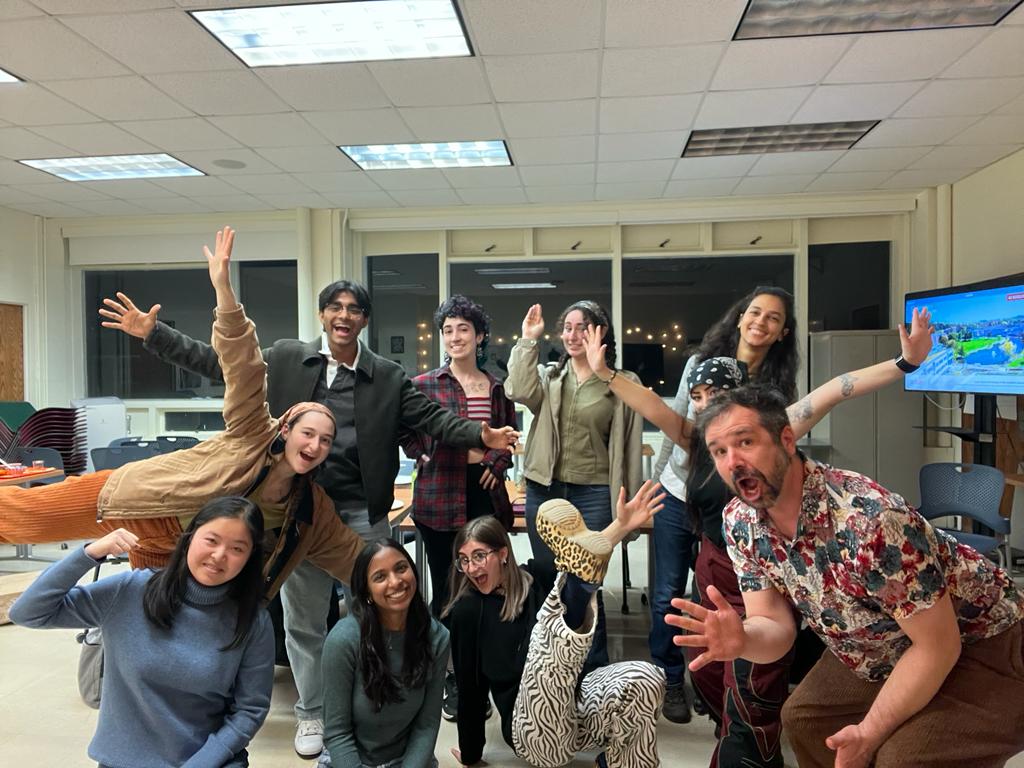
Community Based Summer Internships
This internship program connects students with local social justice, movement-based organizations, that are working to support and create community autonomy. They are designed to build upon and develop anthropological thinking, methods, and skills and forge deeper relationships between the university and community groups.
Previous Internships placements have included:
- The Center for Economic Democracy
- The Resistance Center
- The New Economy Coalition
- Wellspring Cooperatives
- Building Solidarity Economies
- Common Share Food-Coop
- Riquezas Del Campo
- Peace Development Fund
Internships take place over the course of the summer with an optional but encouraged credited, academic component occurring in the summer or fall.
2020 Summer Community-Based Internship Report
2022 Summer Community-Based Internship Report
Anthropology 540 Community, Commons, Communism
In this seminar, we read, think, and talk about collective, relational, and interdependent subjectivities and practices; as well as the movements and projects that have aimed or are aiming to create these conditions. We read and theorize communism as a historical project, a polical/ontological horizon, and an enacted way of being. This is a graduate level class that is open to advanced undergraduates.
Graduate Students and CERP (Community Engaged Research Program) MA
In addition to PhD students and MA students who engage with the BSE ecosystem in different ways, from time to time, we will accept graduate students through the Anthropology Department’s Community Engaged Research Program (CERP). We will sometimes put out direct calls, when there are particular research needs or opportunities in the movement. We also are open to proposals and inquiries–bshear@umass.edu
Independent Studies
BSE also facilitates independent studies that contribute to the broader assemblage of post-capitalist happenings on campus, in Massachusetts, and beyond.
Gatherings, Experiments, Projects
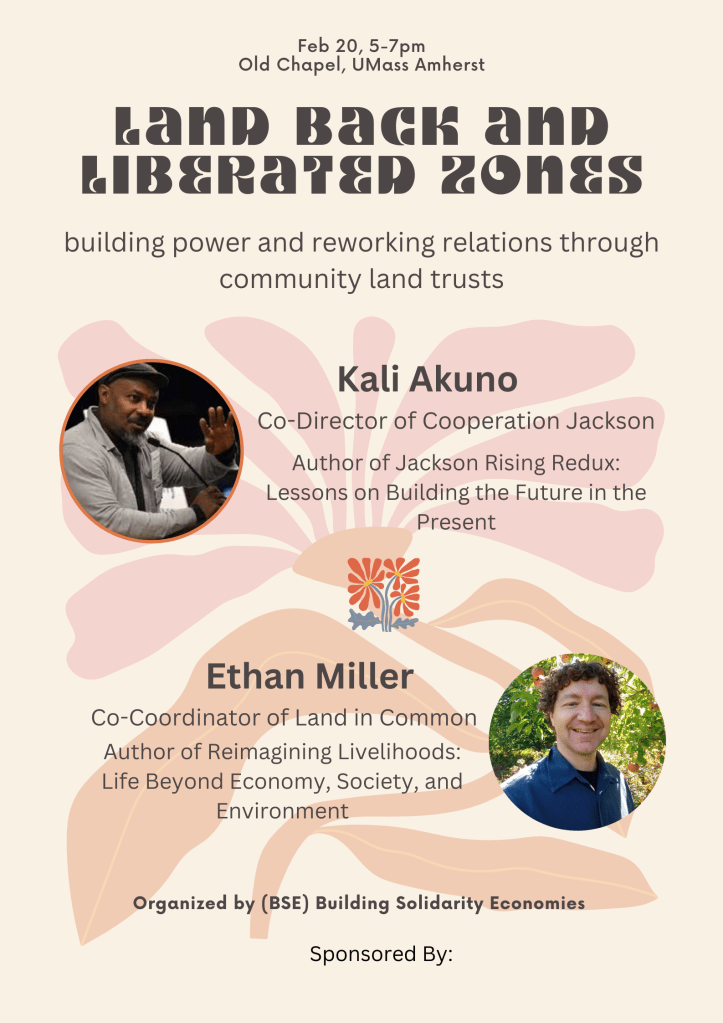
BSE involves itself in projects that can build new or strengthen existing connections and collaborations between organizations, movements, and communities who embody or are oriented towards a post-capitalist world. We organize events, facilitate reading groups, host speakers,
 buildingsolidarityeconomies.com